

‘Tiny Little Piece of History’
Ancestral gifts, a bit of fiction (!), more book reccs

Hello from London, where I’ll be for the next little while because I’m sorting out visa stuff — IG doesn’t show you the paperwork behind the highlight reels, and I’ll spare you the details here because they are so boring.
I have this weird tendency when something good happens to blurt out the string of bad things that happened before, partly because I’ve been chatting with friends about how the highlight reels of IG constantly inspire unnecessary comparisons — sometimes people deserve to know the slew of disappointments that led to a win. I actually wrote a mini-essay about mourning disappointments for this newsletter but I will save it for later because it was a long fucking winter, and we deserve some sun.
My first piece in the New York Times was published today — a dream byline that I longed for so much that I only gathered courage to pitch cold once (gotta dig into that psychology of fear of rejection one day, but today we are HAVING FUN).

It was a real treat that I got to work on a project very close to my heart: speaking with Asian women across the diaspora on what their ancestral gold means to them. I’ve written about this in relation to my own life for In Exile, but speaking to so many other women about their own family stories served as an excellent reminder of our ancestors’ wisdom in passing down the precious metal.
The price of gold is at a record high amid global economic uncertainty, the market reflecting what aunties, mothers and grandmothers across Asia have always known: it’s a secure investment.
As Joy Tan’s character Lindo Jong says in the Joy Luck Club: “To Chinese people, fourteen carats isn’t real gold. Feel my bracelets. They must be twenty-four carats, pure inside and out.”
Some of us in the diaspora were put off by that telltale yellow sheen, marking us as outsiders, but I loved hearing from so many women who, like me, have come to learn the true value of it.
Huge shoutout to my friend Jason Chiu who reached out asking if I thought there was another story on this topic to explore, and was also one of the visual editors who brought this piece to life.
Here’s an excerpt of the article:
‘Tiny Little Piece of History’
Alicia Penn, 42, Charleston, S.C.
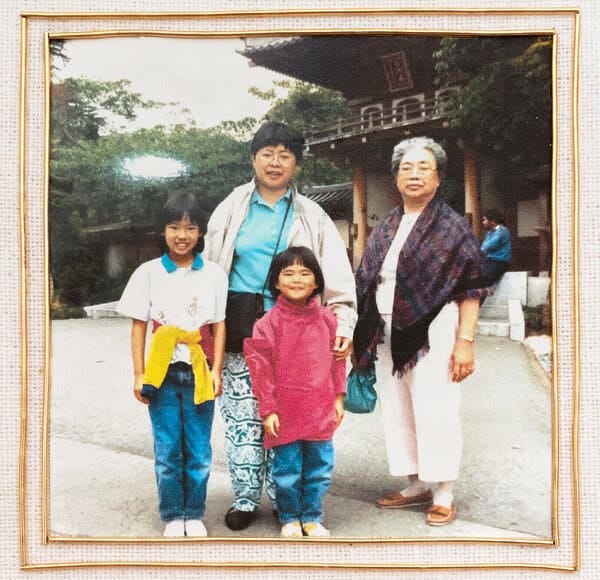
Growing up in Baltimore, Alicia Penn and her siblings would make routine stops at a jewelry store with their mother after visiting the temple. Her mother would spend an hour haggling with the owners, family friends who were also Cambodian, to buy gold accessories that she had no intention of keeping. Instead she would wear a piece until a friend showed interest in buying it, then resell it for a profit.
Penn never gave a second thought to what her mother did. “She explained it as a way to invest and enjoy buying stuff,” Penn said. “I thought it was an interesting way to think about investing, as opposed to traditional stocks and bonds.”
What Penn didn’t know then was that the Khmer Rouge, which was responsible for the deaths of at least 1.7 million Cambodians, had abolished Cambodia’s currency, making gold even more valuable. Penn’s parents left the country before the most brutal years, 1975 to 1979, but her maternal grandmother wasn’t as lucky.
She eventually made it to the United States in 1980 and helped raise Penn and her siblings until she died when Penn was still a child. Penn learned the story of how her grandmother escaped in 2022 during a visit to her mother’s bank locker, where she was invited to select a piece of jewelry: a tiny flat piece of gold in the shape of a mermaid.
“I’d never seen anything like it before,” Penn said.
The jewelry was one of two remaining charms of a gold belt that once belonged to her grandmother. She had sold and bartered pieces of the belt, made up of charms linked together, to escape the genocidal killing fields and flee to Thailand on foot.
Penn wears the charm on a heavy gold chain with a malleable hook enclosure. “It’s this tiny little piece of history that you can’t replicate,” Penn said. “Nobody makes things like this anymore.”
Here’s a gift link to the rest of the piece: Asian American Women Are Redefining the ‘Old’ in Grandmother’s Gold
Pleasure
I started writing fiction in 2020, and have been a bit unsure what to do with it. I finished one story recently, after writing the majority of it on a train on my first trip to Italy in 2022. Here’s an excerpt, centering a character who is the first in her ancestral line to have the freedom to chase what she wants, and is only awakening to that power.
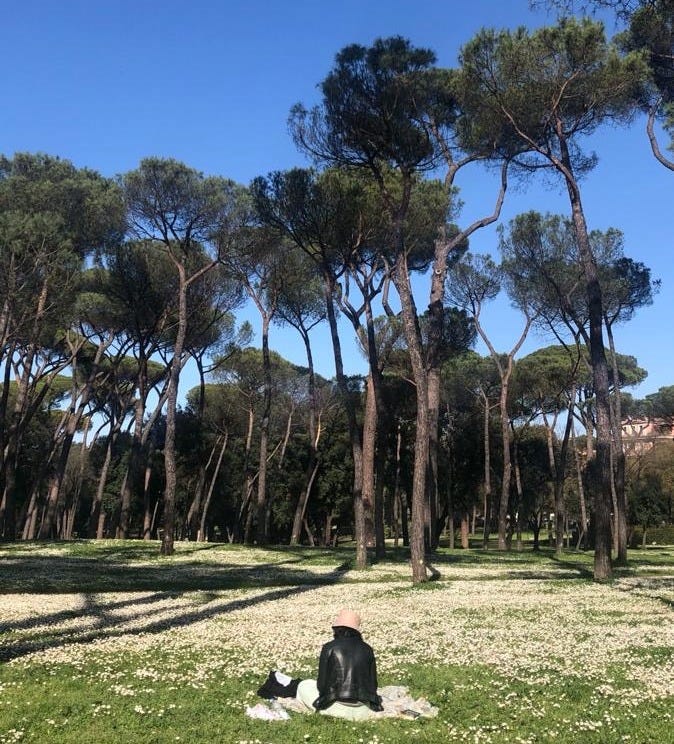
Samira watched the platform roll by, cracked grey concrete punctuated with black benches, until the final bench was just a dark blur. It took less than twenty minutes to leave Rome behind. The train rocked slightly while hurtling forward into green hills, the tracks cradled in an awakening valley. Trees were starting to bloom — baby celadon green leaves arching towards the sun, tiny buds holding promise. A complex network of roads climbed up hills, connecting villages that dotted the hill face.
It’s exactly how Samira had imagined Tuscany, but she was in Umbria. Why didn’t anyone talk about the rolling hills of Umbria, she wondered, as she watched a bird fly furiously alongside her railcar. The sky was as blue as the first time she had witnessed these fields carpeted with delicate white and yellow flowers – weeds technically, but that didn’t stop her from appreciating them.
Samira had made the same journey three years ago, also in early April. The annual “Innovations in Sustainable Funding” conference her boss usually emptied out their NGO’s professional development fund to attend fell on an inconvenient week — Ann was just too pregnant to fly. She begrudgingly offered her place to Samira, but instead of just attending she also had to organize a panel on the invisible workload BIPOC women carried in the sector.
Samira took the opportunity to get her oldest friend Hafsa invited, who worked for a non-profit newsroom in Mexico City, to the conference. Hafsa had planned to bring her husband Andre along. Samira had been looking forward to some one-on-one time with her childhood friend who had moved to Mexico City three years ago, but in her early thirties she’d accepted she had to contend with third wheels. Hafsa and Andre were in love with an intensity that was surprising for a couple who had been together since university. It was both inspiring and obnoxious.
Samira had been relieved to be somewhere new, hearing a language she didn’t understand, translating novel mannerisms, learning to interpret how clothes reflect class. She was feeling uninspired in the city she lived in — she could feel how her ennui threatened to become indifference, something that could pull her under. She didn’t want to sink, to settle. But what was the alternative?
This trip was a break from answering herself these questions incessantly, the newness of the Italian countryside feeling like an opportunity for reinvention. Samira wanted to feel like someone unfamiliar. She packed to exude a quiet confidence — soft neutrals, wispy scarves, delicate gold hoops.
It was on that first train ride to Assisi that she had first spotted Ilyas. When she boarded in Rome, he offered with a gesture to help put her metal grey carry-on on the rack above her seat. She let him. There was warmth in his translucent brown eyes, a softness that deepened when wrinkles appeared around them, his dark brown lashes moving in tandem with his smile.
Samira spent the entire two hours and fifty-six minutes on her laptop, intending to revise a chapter of the novel no one knew she was working on. She gave up an hour into the journey, somewhere around Terni, a steel town best known as the home of Saint Valentine, most forgetting his eponymous day that celebrates courtship marks the day he was brutally martyred.
She opened a fresh document surmising where he was from and what he was doing on this train. He had a gorgeous karaava naak — standing nose, as her mother would say in Urdu, very pink lips and the kind of stubble that suggested he likely only could stay clean shaven for an hour. She wondered if he was Italian, or visiting like her. He had that type of olive skin that makes it obvious that Europe isn’t really a different continent than Asia. She caught his eye once when he went to the loo, and at every stop she surreptitiously glanced at who was exiting.
When the train stopped at Assisi, Ilyas asked Samira if she needed help taking her luggage down, sounding American with the slightest fleck of an English accent. She nodded, unwilling to give him the ability to locate her just yet. Out on the platform, he asked if she was on her way to the conference, and if so, whether she wanted to share a cab. Samira responded yes, giving her Canadian accent away. They chatted politely about modernizing funding models during the fifteen minutes it took to climb the hill. Three hairpin turns later, when the hotel came into sight, he rested his hand in the space between them beside hers on the black leather seat, close enough to lightly touch her pinky with his. “Would you like to have dinner together this evening?”
Hafsa wasn’t getting in until the following morning, and despite the gold band she spotted on his right hand, Samira said yes.
Let me know if you want more of this story — I’m toying with serialising fiction in future newsletters, because we all deserve little delights in our inbox.
What I’m reading
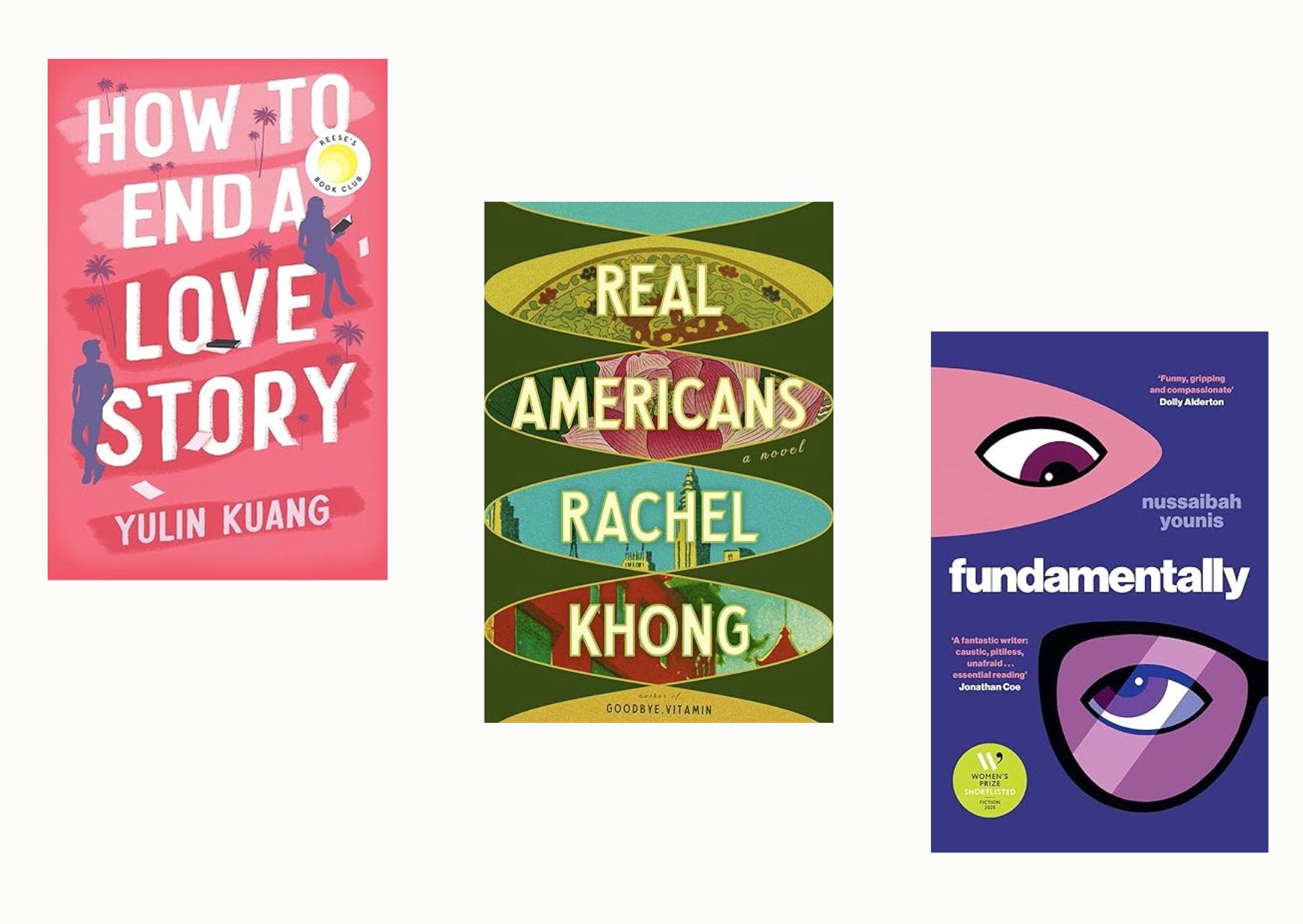
Here are a few books I have loved recently:
Fundamentally by Nussaibah Younis: A woman writes exactly one academic article about deradicalising ISIS brides, then is handed a UN job to do just that. What could go wrong? This book is batshit in the most hilarious and brilliant way, and what I extra loved about the author was going to one of her launches in London, and finding it to be just as fun as the book.
How to End a Love Story by Yulin Kuang: Enemies-to-lovers with a backstory so complicated you’re not sure you should root for them to be together, but it gets really steamy, so you can’t help it. Also, the subplot revealing how the main character felt suffocated by her parents’ immigrant love was so real – I appreciated its subtleties.
Real Americans by Rachel Khong: A multi-perspective story about a Chinese-American family spanning three generations with a touch of spec fiction — I didn’t know I needed something like this until I read it. I read a profile of Khong recently in TIME, and she said many smart things, but this *really* resonated:
“There’s something uncomfortable about writing something that’s just your own and nobody is expecting it,” she says. “You’re kind of looking around like, Who gave you permission?”
Until next time,
Sadiya
Love this!